Former and current project members
Henry R. Immerwahr |
||
Henry R. Immerwahr |
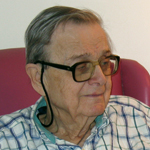
Henry Rudolph Immerwahr was born on February 28, 1916 in Breslau, Germany (now Wrocław, Poland). Because of his Jewish ancestry he left Germany to attend the University of Florence (1934–38), where he received a Dottore in Lettere. While in Florence he registered with the International Student Service in Geneva, Switzerland, and through this intermediary was offered a fellowship to the American School of Classical Studies at Athens from a philanthropist in New York. There he aquired his interest in Greek epigraphy. He arrived in Athens on March 3, 1939. But in that year the war in Europe erupted and most of the students at the School went back to the States prior to the German invasion of Greece in 1940. In America he spent the next two years as a graduate student at Yale (PhD 1942) before being drafted into the US army (1942-45). (Sent by H.R.I. on 21 March 2009.) Henry Immerwahr deceased on 15 September 2013, aged 97 (obituary). |
|
Rudolf Wachter |
||
Rudolf Wachter |
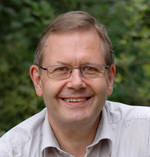
Rudolf Wachter, born in, and citizen of, Winterthur in Switzerland, studied in Zürich, where he took a doctorate in Latin linguistics and literature in 1986 with the thesis, Altlateinische Inschriften: Sprachliche und epigraphische Untersuchungen zu den Dokumenten bis etwa 150 v. Chr. (published by Peter Lang, Bern, in 1987). With a young researcher's fellowship from the Swiss National Science Foundation, he went to Oxford to continue his studies in the field of Greek vase inscriptions. The result was a second doctorate, a D Phil. in 'Comparative Philology' of the University of Oxford, the thesis being entitled Non-Attic Greek Vase Inscriptions. Ernst Risch in Zürich (†1988) and Anna Morpurgo Davies in Oxford (†2014) were his principal teachers, and he owes them more than he can tell. Back in Switzerland, he got part-time teaching posts in Greek, Latin, and Indo-European linguistics at the Universities of Fribourg and Basel, acquired his venia docendi at Basel with the final and enlarged version of NAGVI in 1996 and got a 50% tenure post as a professor extraordinary a year later. NAGVI was eventually published by OUP in 2001, in the year of a replacement professorship at Heidelberg, when he also made the first contact with Henry Immerwahr about (C)AVI and photographed the first vase collection. In 2006 the part-time tenure at Basel was completed when he was appointed professeur associé in historical linguistics at the University of Lausanne. |
|
Simone Hiltscher |
||
Simone Hiltscher |
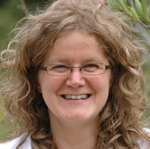
Simone Hiltscher studied German and History at the University of Bonn. Besides and after her studies she worked as journalist and editor for several publishing houses and newspapers. In 2001 she completed a further education as Multimedia Publisher and started working as a Multimedia Developer at the Universities of Basel and Berne in several projects. Amongst others she was responsible for the technical realisation of the project "Latinum electronicum", an online Latin course for university beginners, published by Mouton-De Gruyter in 2008. From 2005 to 2021 she also worked for the Parzival Project (now University of Berne), where she produced digital editions of manuscripts of Wolfram von Eschenbach's Parzival. In 2021 she moved on to the university administration. |
|
Georg Gerleigner |
||
Georg Gerleigner |
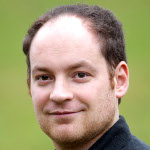
Georg Gerleigner grew up in a small town in rural Lower Bavaria, Germany. After intensive contact with the ancient world through learning Latin and Ancient Greek at school for nine and five years, respectively, he went to study in Munich where he took his first degree ('Magister Artium') in Klassische Archäologie, Griechische Philologie and Alte Geschichte in 2007. Shortly after starting his PhD dissertation, whose topic grew out of his Magister thesis (supervised by Luca Giuliani and Susanne Muth), he went to Cambridge (Girton College) as a visiting PhD student before transferring to there completely. In 2012, he was awarded a PhD in Classics from the University of Cambridge for his thesis (supervised by Robin Osborne and examined by Anthony Snodgrass and François Lissarrague) 'Writing on Archaic Athenian Pottery. Studies on the Relationship between Images and Inscriptions on Greek Vases' (publication still in preparation).
|
|
Former student assistants |
||
Malte Schaffnit |
||
Malte Schaffnit |
Malte Schaffnit is studying Ancient Civilizations with a focus on Greek and Latin Philology (and a short insight into studying mathematics) in Basel since 2015. He has been a student assistant in the AVI project since June 2017. So far he worked mainly on a comparison of the data from the AVI-database, the Beazley Archive Pottery Database and the LIMC. |
|
Julia Bossart |
||
Julia Bossart |
Julia Bossart started her studies in European Archaeology ('Ur- und Frühgeschichte'),
Classical Archaeology, and Ancient History at the University of Basel in 2002 and took
the final degree of Licentiata philosophiae in summer 2008. Subsequently she worked with
the Archaeological Service of the City and Canton of Basel-Stadt and will soon move to
Berlin. |
|
Victoria Fendel |
||
Victoria Fendel |
Victoria studied Classics in Basel from 2009 to 2014. She did her undergraduate studies in Greek and Latin and her Master’s degree in Greek and Near Eastern Archaeology. While
doing her Master’s she spent six months as an exchange student in Berlin. Currently she is
working on her PhD thesis about language contact between Greek and Coptic at the
University of Oxford. |
|
Florence Häusermann |
||
Florence Häusermann |
Florence Häusermann is studying Classics in Basel and Zurich. Besides she worked at the library of classical and ancient studies (‘Bibliothek Altertumswissenschaften’) and has been a Latin teacher at the STH Basel (‘Staatsunabhängige Theologische Hochschule’) since 2015. In the AVI project Florence has been a student assistant since January 2014. Her main task is to look for new bibliography (c. 1990 up to the present) and inscribed Attic vases, especially in the CVA volumes that Henry Immerwahr had not integrated into the database. |
|
Last update 2022-10-17